


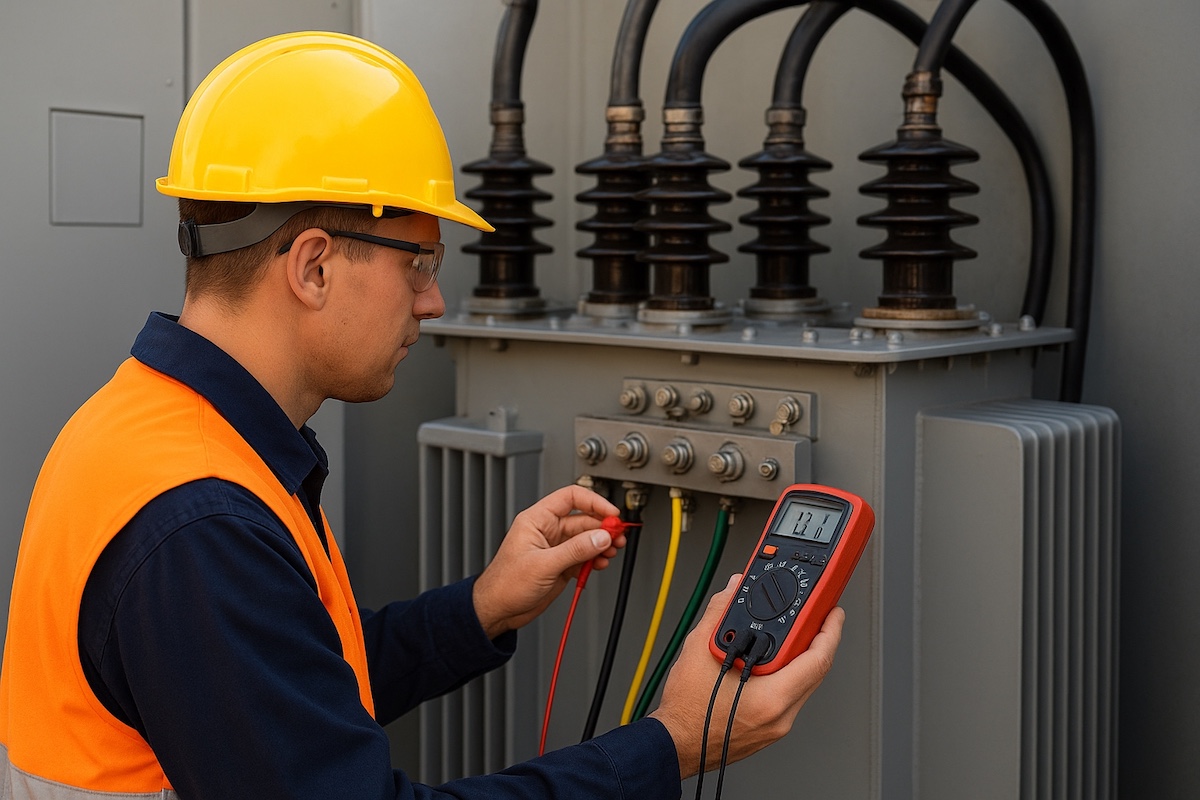
Testing and commissioning of electrical installations mark the critical final phase before energization of any power system—whether it’s an industrial plant, commercial building, or utility substation. This phase ensures that all installed electrical equipment and systems perform safely, efficiently, and in full compliance with design specifications, standards, and regulatory requirements.
1. Purpose and Importance
The primary goal of testing and commissioning is to verify that electrical systems function as intended under both normal and fault conditions. This process identifies potential defects, improper connections, insulation weaknesses, or incorrect settings that could compromise reliability or safety. Beyond quality assurance, commissioning provides documented proof that the installation meets statutory and contractual obligations, reducing operational risks and long-term maintenance issues.
2. Pre-Commissioning Preparation
Best practice begins with comprehensive pre-commissioning checks. This includes reviewing as-built drawings, cable schedules, and single-line diagrams to ensure that installation aligns with approved designs. Visual inspections confirm correct equipment labeling, mechanical integrity, and adherence to earthing and bonding standards. All cables should be tested for continuity and insulation resistance prior to connection. Moreover, verifying torque settings on terminals, cleanliness of switchgear, and proper gland sealing prevents early failures.
3. Electrical Testing Procedures
Electrical testing is conducted in a structured sequence, progressing from individual components to system-level validation. Key tests include:
- Insulation Resistance Testing: Ensures the integrity of cable and equipment insulation to prevent leakage currents and faults.
- Earth Continuity and Resistance Testing: Confirms that the earthing system provides a low-impedance path for fault currents.
- High-Potential (Hi-Pot) Testing: Applies overvoltage to verify dielectric strength of insulation systems.
- Polarity and Phase Sequence Tests: Essential for correct operation of three-phase equipment and protection coordination.
- Protection Relay Testing: Functional and secondary injection tests ensure protection devices operate within specified time and current settings.
- Circuit Breaker and Switchgear Testing: Verifies mechanical operation, contact resistance, and tripping characteristics.
For power transformers, tests such as winding resistance, turns ratio, and oil dielectric strength are conducted, while motors and generators undergo no-load and load tests to confirm performance.
4. System Commissioning and Functional Verification
Once individual components are verified, system-level commissioning follows. This involves energization in stages—starting with low-voltage systems, then progressing to medium or high voltage. Protection coordination and interlocking logic are tested to confirm safe operation under fault conditions. Instrumentation, control, and SCADA systems are also integrated and validated for accurate monitoring and control.
5. Documentation and Compliance
Every test result, setting, and observation must be meticulously documented. Test certificates, calibration reports, and commissioning records form the foundation for system acceptance and future maintenance. Compliance with international standards such as IEC 60364, IEEE, or BS 7671, and local regulations ensures legal conformity and safety assurance.
6. Safety and Quality Assurance
Safety is paramount throughout the process. Testing personnel must follow lockout-tagout (LOTO) procedures, wear appropriate PPE, and ensure systems are de-energized before handling. Quality assurance practices—such as using calibrated instruments and witnessing tests—enhance credibility and reliability.
Conclusion
Testing and commissioning are not mere formalities—they are vital steps that transform an electrical installation from a collection of components into a reliable, compliant, and safe operating system. Adhering to structured procedures, meticulous documentation, and international best practices guarantees operational excellence and long-term reliability in every electrical project.
Comments are closed