


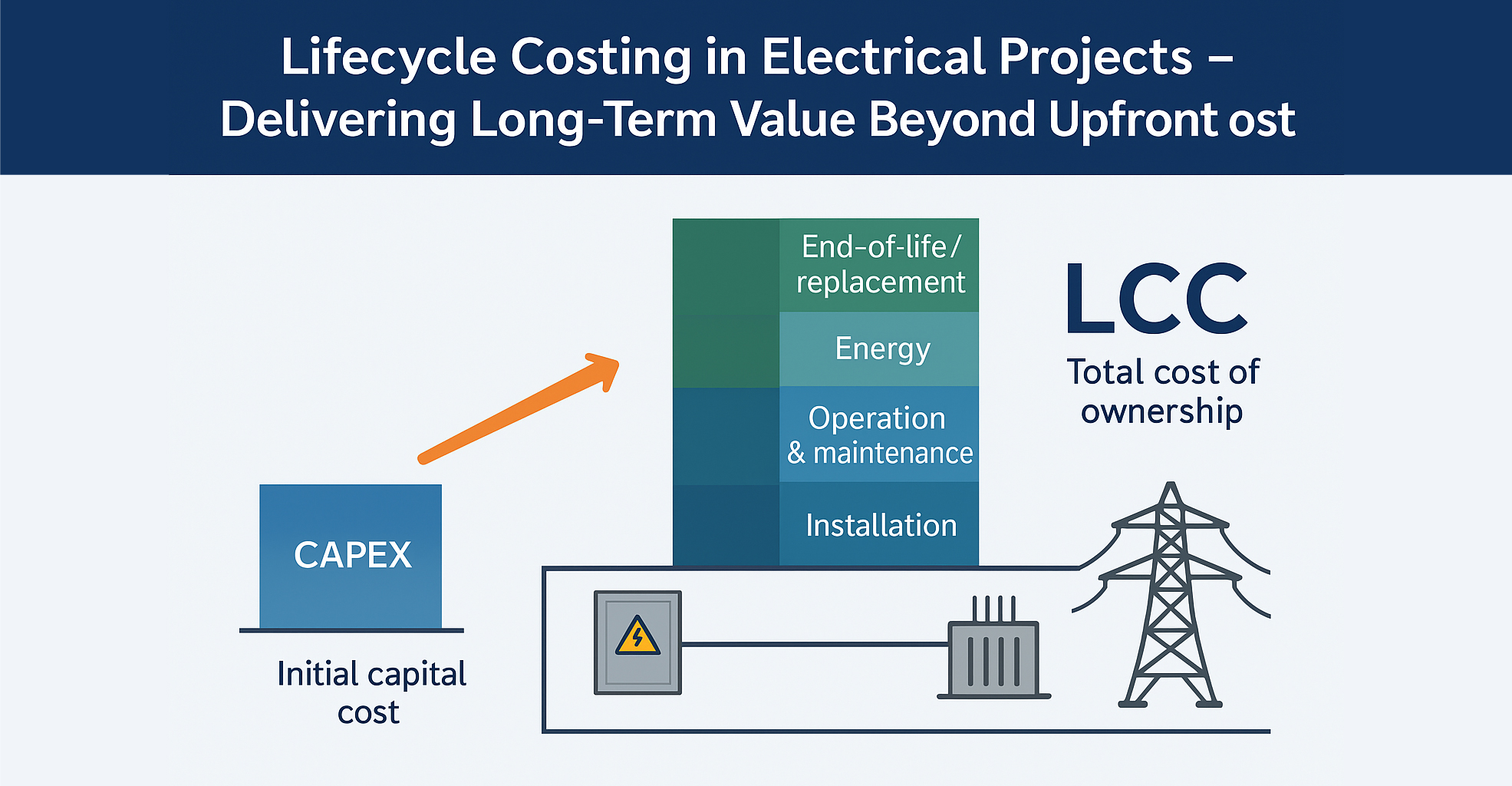
In electrical engineering, projects are often judged on their ability to meet technical requirements within budget and schedule. Too frequently, however, project evaluation focuses narrowly on capital expenditure (CAPEX), sidelining the costs that accumulate over the decades-long life of electrical infrastructure. Lifecycle Costing (LCC) offers a more strategic lens—one that considers not only the purchase price, but also operating, maintenance, reliability, and end-of-life costs.

Fire protection in electrical installations is a holistic responsibility that begins with design and extends through installation, operation, and maintenance. For panel builders and contractors, adopting best practices—ranging from correct sizing and material selection to integration of detection systems and ongoing maintenance—ensures installations remain safe and reliable.