


Lighting plays a critical role in how people perceive and interact with their environment. While energy efficiency and lumen output often receive the most attention, two equally important factors—Color Temperature and Color Rendering Index (CRI)—have a significant impact on productivity, comfort, safety, and overall user experience.
Understanding these lighting characteristics helps engineers, facility managers, architects, and business owners make informed decisions when selecting lighting solutions for different applications.

Power Factor Correction (PFC) is a critical technique in electrical power systems used to improve the efficiency of power utilization and reduce energy losses. In industrial and commercial installations, where inductive loads such as motors, transformers, and fluorescent lighting are prevalent, poor power factor is a common issue that leads to higher currents, increased losses, and unnecessary costs.

Plug-and-play installation of compact substations has emerged as a transformative approach in modern power distribution, particularly in fast-track projects, urban developments, and remote electrification. As an electrical power engineer, the value of this concept lies in its ability to significantly reduce deployment time, minimize on-site complexity, and optimize overall project costs without compromising reliability or performance.

As a new year begins, electrical contracting firms are setting fresh goals, planning new projects, and seeking better ways to deliver results efficiently. In this context, project management stands out as a critical driver of success. Both a science and an art, project management involves the careful planning, organization, coordination, and control of resources to achieve defined objectives. When applied effectively, it transforms complex electrical projects into well-executed successes.
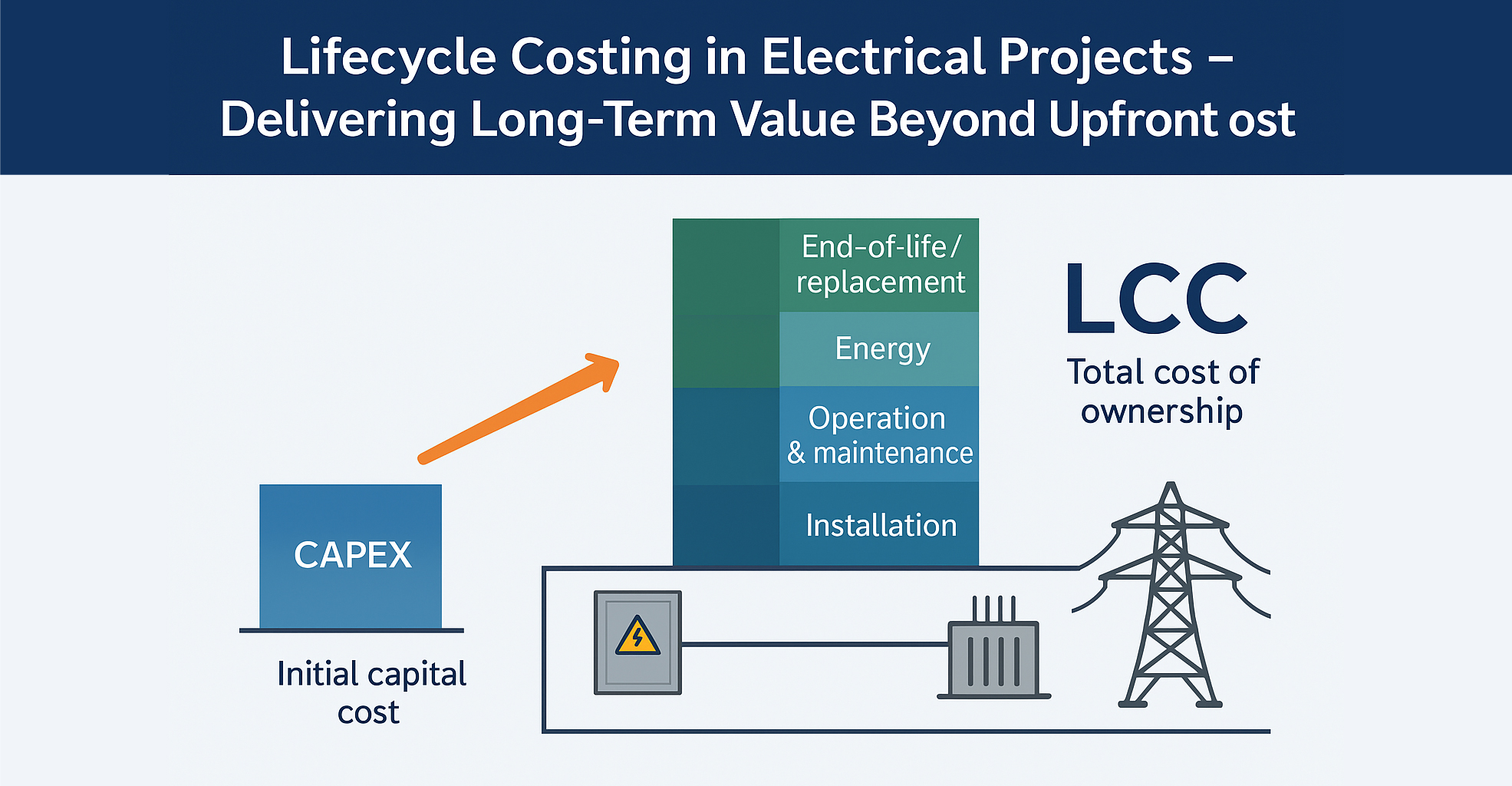
In electrical engineering, projects are often judged on their ability to meet technical requirements within budget and schedule. Too frequently, however, project evaluation focuses narrowly on capital expenditure (CAPEX), sidelining the costs that accumulate over the decades-long life of electrical infrastructure. Lifecycle Costing (LCC) offers a more strategic lens—one that considers not only the purchase price, but also operating, maintenance, reliability, and end-of-life costs.

In the electrical power industry, successful project execution depends not only on engineering expertise but also on strong collaboration with suppliers and panel builders. As projects become increasingly complex and timelines tighter, forming strategic partnerships with these stakeholders is no longer optional—it is a necessity.

Battery Energy Storage Systems (BESS) are pivotal in modern power systems, offering flexibility, reliability, and resilience to both utility-scale and distributed energy networks. Whether used for backup power or grid support, the design of a BESS must be tailored to its application, environment, and operational objectives. Here are the key design considerations that engineers must evaluate.

As July arrives, electrical engineering and contracting firms often find themselves in a critical window — the procurement planning phase for Q3 projects. This period is pivotal, especially for projects scheduled to break ground or reach key installation milestones in the coming months. Effective planning now helps avoid costly delays, manage cash flow, and secure hard-to-find components. Here's what industry professionals need to keep in mind.

As June begins, many regions around the globe enter their most demanding energy season. Rising temperatures bring increased use of HVAC systems, refrigeration, and cooling equipment—especially in industrial and commercial environments. For electrical engineers and facility managers, this means one thing: your systems must be ready for peak load performance.

Value engineering (VE) is a systematic and disciplined approach aimed at enhancing the value of a project by evaluating functions and identifying opportunities to reduce costs while maintaining or improving safety, reliability, and performance. In electrical engineering projects, VE is especially crucial due to the high capital investments and the need for long-term operational efficiency. The goal is not simply cost-cutting but optimizing solutions to deliver the best value over the project lifecycle.