


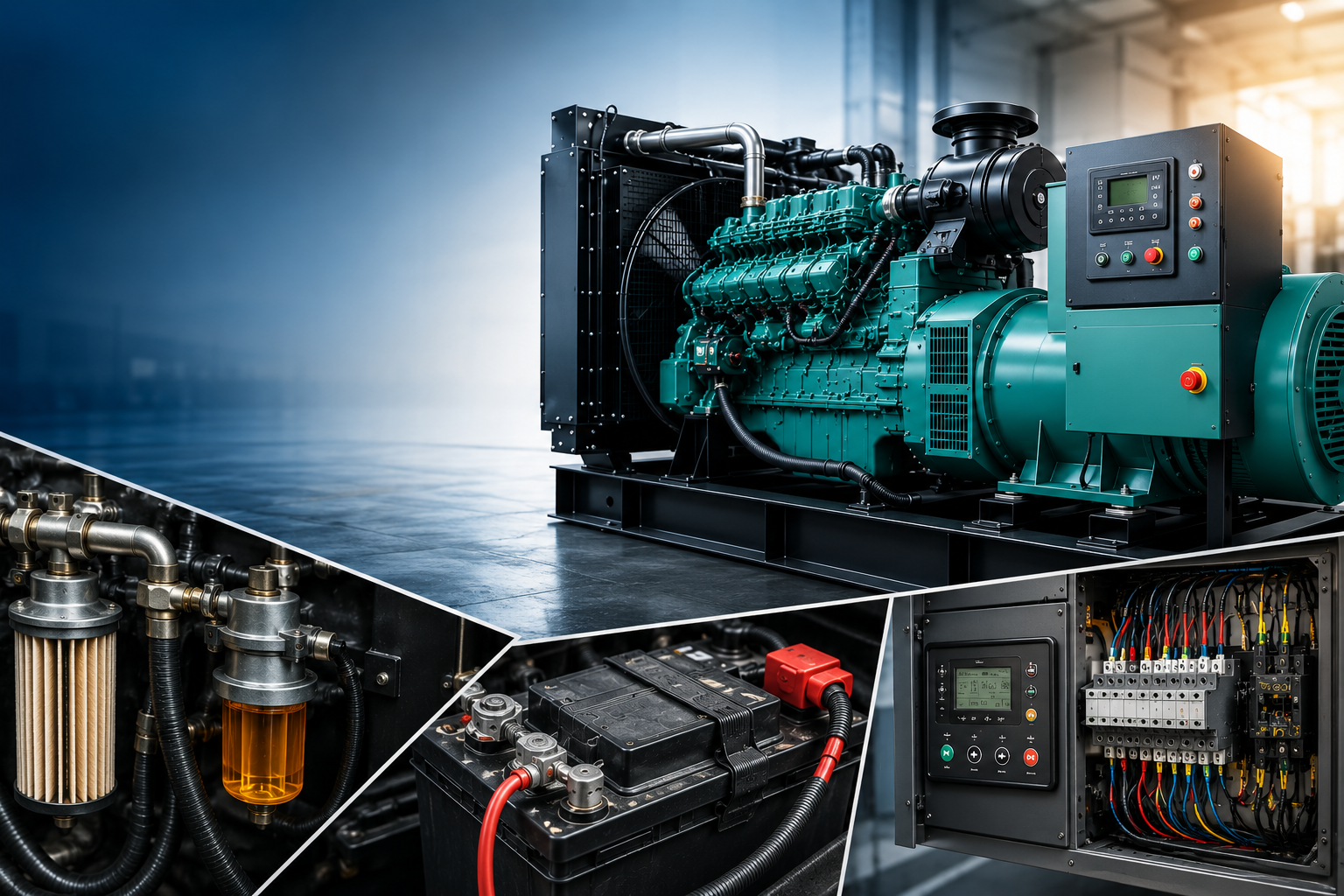
Standby and prime power generators are critical assets for hospitals, manufacturing facilities, data centers, commercial buildings, and utility infrastructure. Despite their robust construction, generators often fail when they are needed most—not because of catastrophic mechanical damage, but due to neglected maintenance or seemingly minor faults. Industry experience consistently shows that fuel system problems, battery failures, and control system issues account for the majority of unexpected generator outages. Understanding these common failure modes and implementing preventive maintenance can significantly improve reliability and extend equipment lifespan.
1. Fuel System Problems
Fuel-related issues are among the leading causes of diesel generator failure. Over time, diesel fuel deteriorates through oxidation and microbial contamination, forming sludge, sediments, and water accumulation in storage tanks. These contaminants clog fuel filters, damage injection pumps, and reduce combustion efficiency. Low fuel levels can also allow air to enter the fuel lines, making engine starting difficult.
Fuel filters should be inspected and replaced according to the manufacturer’s maintenance schedule. Bulk fuel tanks should undergo periodic cleaning, while water separators should be drained regularly. Fuel polishing systems are recommended for installations where diesel remains in storage for extended periods, such as emergency standby generators. Operators should also periodically test fuel quality to ensure it meets required specifications.
2. Battery and Starting System Failures
A healthy battery is essential because it provides the energy required to crank the engine during startup. Ironically, many generators fail before they even begin producing power due to discharged or deteriorated batteries.
Battery failures commonly result from aging, sulfation, loose terminals, corroded connections, defective battery chargers, or prolonged inactivity. Temperature extremes further reduce battery performance, particularly in cold environments where cranking current requirements increase significantly.
Preventive measures include regular battery voltage testing, load testing, electrolyte level inspections for flooded batteries, cleaning terminal corrosion, and verifying charger operation. Most maintenance professionals recommend replacing generator starting batteries every three to five years regardless of their apparent condition. Automatic battery monitoring systems can provide early warnings before failure occurs.
3. Control System and Electrical Faults
Modern generators rely on sophisticated electronic controllers to manage engine starting, synchronization, protection, monitoring, and shutdown functions. Faulty sensors, damaged wiring, software configuration errors, or failed communication modules can prevent automatic startup or cause nuisance trips during operation.
Common control-related failures include defective coolant temperature sensors, oil pressure switches, speed sensors, voltage regulators, and automatic transfer switch (ATS) communication problems. Electrical disturbances such as voltage surges or moisture ingress may also damage sensitive control electronics.
Routine inspection of wiring, terminal tightness, controller alarms, firmware updates, and sensor calibration helps ensure reliable operation. Protective relays and shutdown settings should be periodically verified to prevent false trips while maintaining adequate equipment protection.
Importance of Regular Load Testing
Generators that remain idle for months may develop hidden problems that are not apparent during no-load operation. Regular load bank testing subjects the generator to controlled electrical loading, allowing engineers to verify voltage regulation, frequency stability, cooling performance, fuel system operation, and engine response under realistic conditions.
Load testing also helps prevent wet stacking—a condition where incomplete combustion allows unburned fuel and carbon deposits to accumulate in the exhaust system of lightly loaded diesel engines. Periodic testing at recommended load levels improves combustion efficiency and reduces long-term maintenance costs.
Best Practices for Preventing Generator Failure
A comprehensive preventive maintenance program should include:
- Inspect fuel quality and replace clogged filters regularly.
- Maintain adequate fuel storage and remove water contamination.
- Test batteries monthly and replace aging units proactively.
- Verify battery charger performance continuously.
- Inspect electrical connections for looseness, corrosion, or overheating.
- Test sensors, controllers, and protective devices periodically.
- Exercise generators under load according to manufacturer recommendations.
- Maintain detailed service records and trend equipment performance.
Conclusion
Most generator failures are preventable with disciplined maintenance and regular testing. Fuel contamination can restrict engine performance, battery deterioration can prevent startup, and control system faults can disable automatic operation even when the engine is mechanically sound. By implementing routine inspections, predictive maintenance techniques, and scheduled load testing, facility owners can greatly improve generator reliability, reduce unexpected downtime, and ensure uninterrupted power during utility outages. A proactive maintenance strategy not only protects valuable equipment but also safeguards critical operations that depend on continuous electrical power.
Comments are closed