


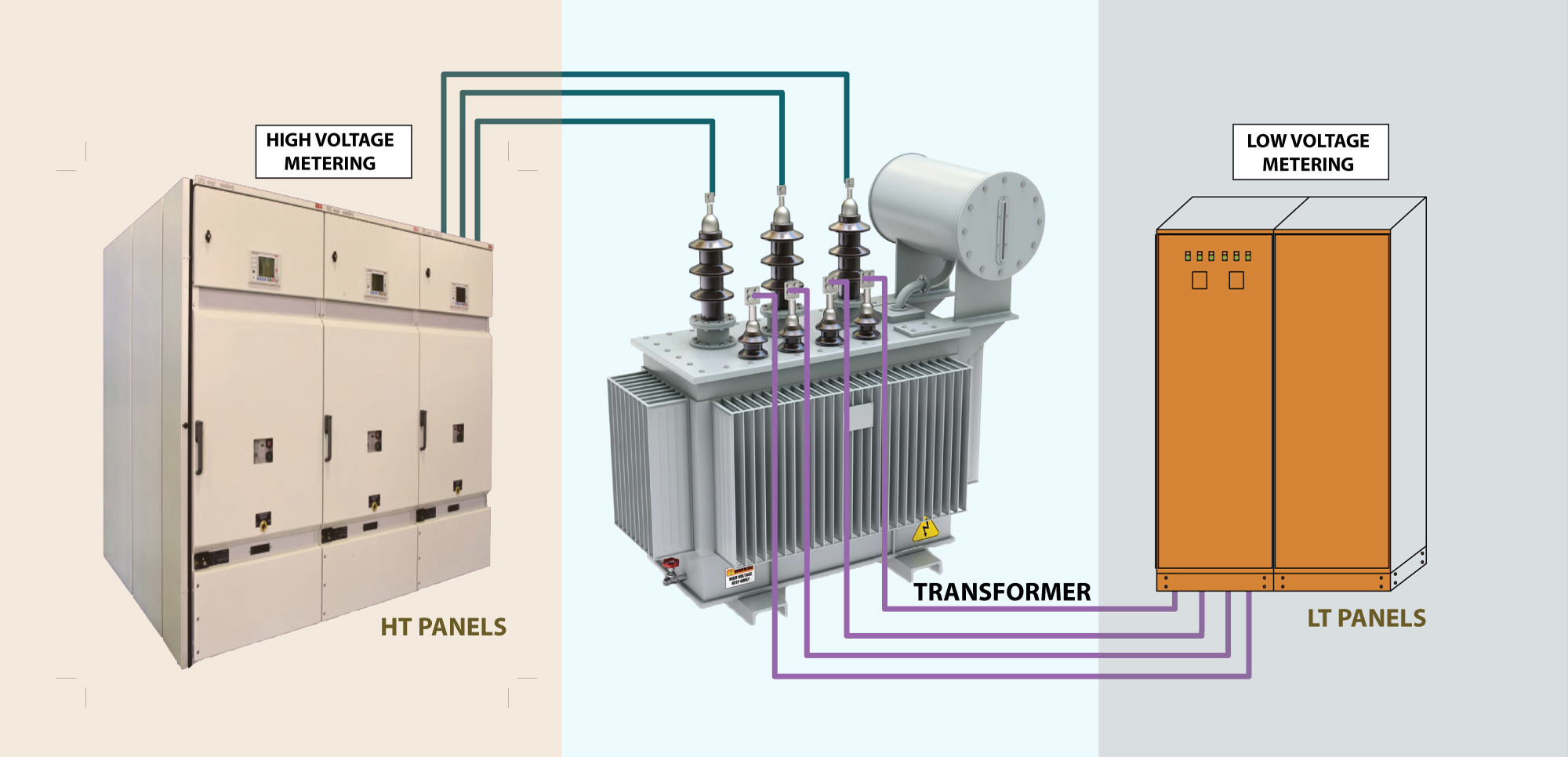
Metering in power systems is essential for accurately measuring electricity usage and managing energy distribution. The two main types of metering are High Voltage (HV) metering and Low Voltage (LV) metering. Each type has specific advantages and disadvantages and is suited for different applications depending on accuracy, cost, and customer type.
High Voltage (HV) metering is typically used in industrial and commercial settings where there is a high demand for electricity. This type of metering is usually applied at voltage levels from 11 kV up to several hundred kV and is installed at substations or at points where power is supplied to large-scale consumers.
One of the main advantages of HV metering is its accuracy, especially at high consumption levels. By measuring electricity before the voltage is stepped down, HV metering accounts for transmission losses, which helps utilities manage energy distribution and reduce waste. Another advantage is that HV metering operates at lower current levels, which reduces the size and cost of necessary infrastructure, such as cables and transformers. This reduction in current requirements can be particularly advantageous in high-demand situations, where LV systems would need a larger, more expensive setup to handle similar loads.
However, HV metering also has disadvantages. The installation and maintenance costs are notably high due to the need for advanced equipment, such as potential transformers (PTs) and current transformers (CTs), as well as specialized expertise for operation and calibration. This drives up both the initial and ongoing expenses. Another drawback is the complexity of setup and the safety concerns associated with high-voltage systems. HV metering requires rigorous safety protocols, and the high voltage levels necessitate extensive protective measures, increasing the time and cost of safe operation.
Low Voltage (LV) metering, in contrast, is commonly used for residential, small commercial, and medium-consumption industrial applications. Operating at voltage levels typically between 230V to 400V, LV metering is often found in distribution networks close to end-users.
Its primary advantage is cost-effectiveness; LV meters are generally less expensive to install and maintain since they require fewer additional components, making them suitable for widespread residential and commercial use where cost efficiency is a priority. Another benefit is that LV metering involves a straightforward installation and calibration process, reducing both setup complexity and maintenance costs. Furthermore, operating at lower voltage levels improves safety for technicians, minimizing the need for rigorous protective measures and making LV systems easier and more economical to manage.
However, LV metering is less accurate when measuring high load levels. At large consumption rates, the high currents in LV systems can introduce measurement inaccuracies, which can complicate accurate billing for large users. Additionally, LV metering measures electricity consumption after the voltage is stepped down, making it challenging to account for distribution losses. This limitation can lead to discrepancies in energy loss tracking, which is critical in large-scale energy management systems.
When comparing the situations in which each type of metering is preferred, HV metering is more suitable for high-consumption applications, such as industrial plants, transmission substations, and commercial facilities connected directly to high-voltage lines. Its precision at high loads and ability to account for transmission losses make it ideal for large consumers. Conversely, LV metering is best suited for residential, small business, and moderate-consumption environments. It provides a safer, more affordable solution for measuring energy at the distribution level, where accuracy at high loads is less critical.
In conclusion, the choice between HV and LV metering largely depends on the scale and type of electricity consumption. HV metering is preferred in high-consumption, industrial settings where accuracy and loss accounting are crucial, despite higher costs and complexity. LV metering, meanwhile, offers a more cost-effective, simpler solution for residential and small commercial applications. Choosing the appropriate metering type ensures accurate billing, effective energy management, and optimized operational costs based on specific customer needs.
Comments are closed