


In today’s highly interconnected and technology-driven world, uninterrupted power supply is no longer a luxury—it is a fundamental operational requirement. As electrical power engineers, we have seen firsthand how power disruptions can cripple businesses, compromise safety, damage equipment, and lead to significant financial losses. Power continuity solutions are therefore not simply technical installations; they are strategic investments in operational resilience, business stability, and long-term sustainability.
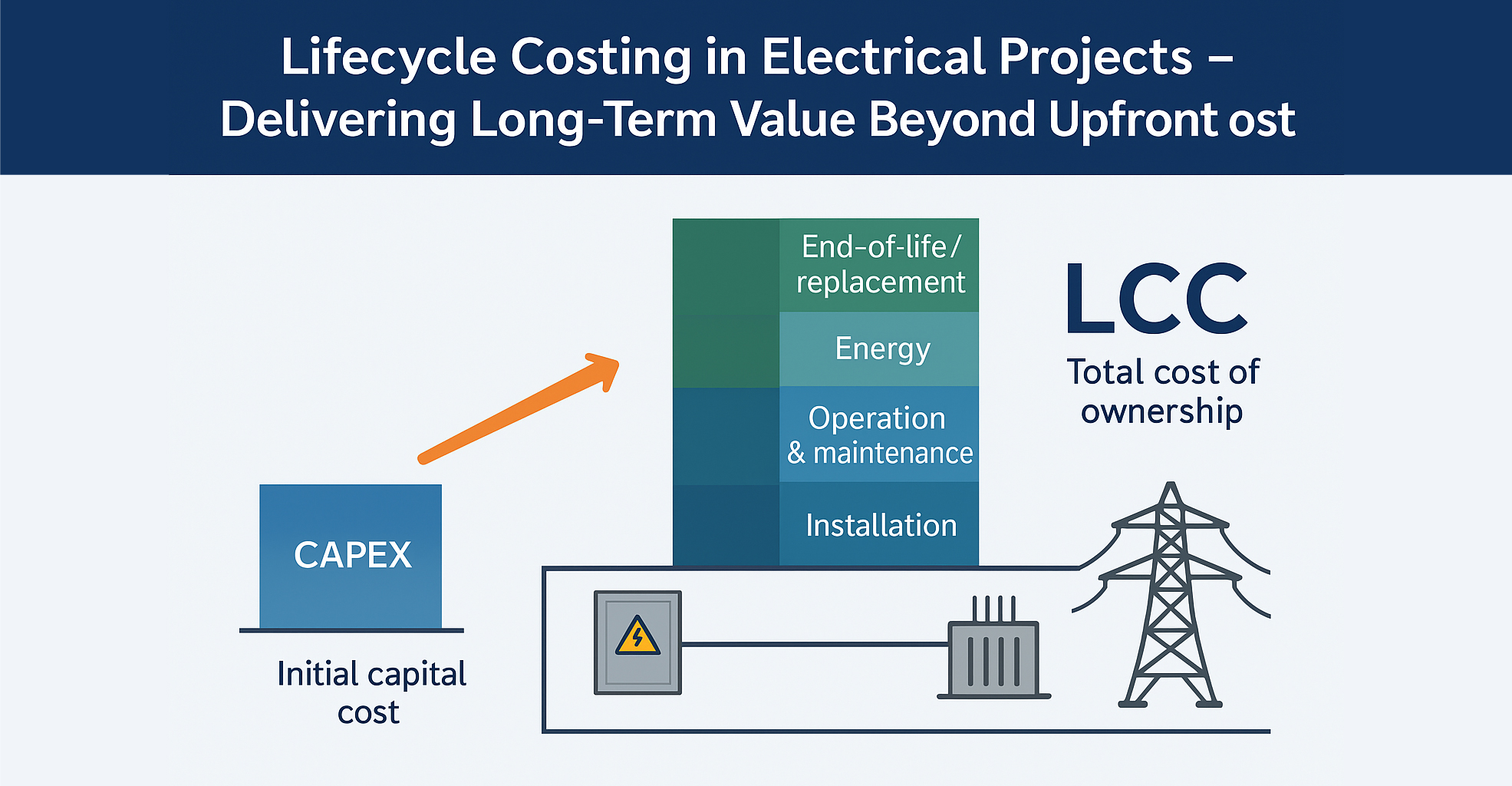
In electrical engineering, projects are often judged on their ability to meet technical requirements within budget and schedule. Too frequently, however, project evaluation focuses narrowly on capital expenditure (CAPEX), sidelining the costs that accumulate over the decades-long life of electrical infrastructure. Lifecycle Costing (LCC) offers a more strategic lens—one that considers not only the purchase price, but also operating, maintenance, reliability, and end-of-life costs.