


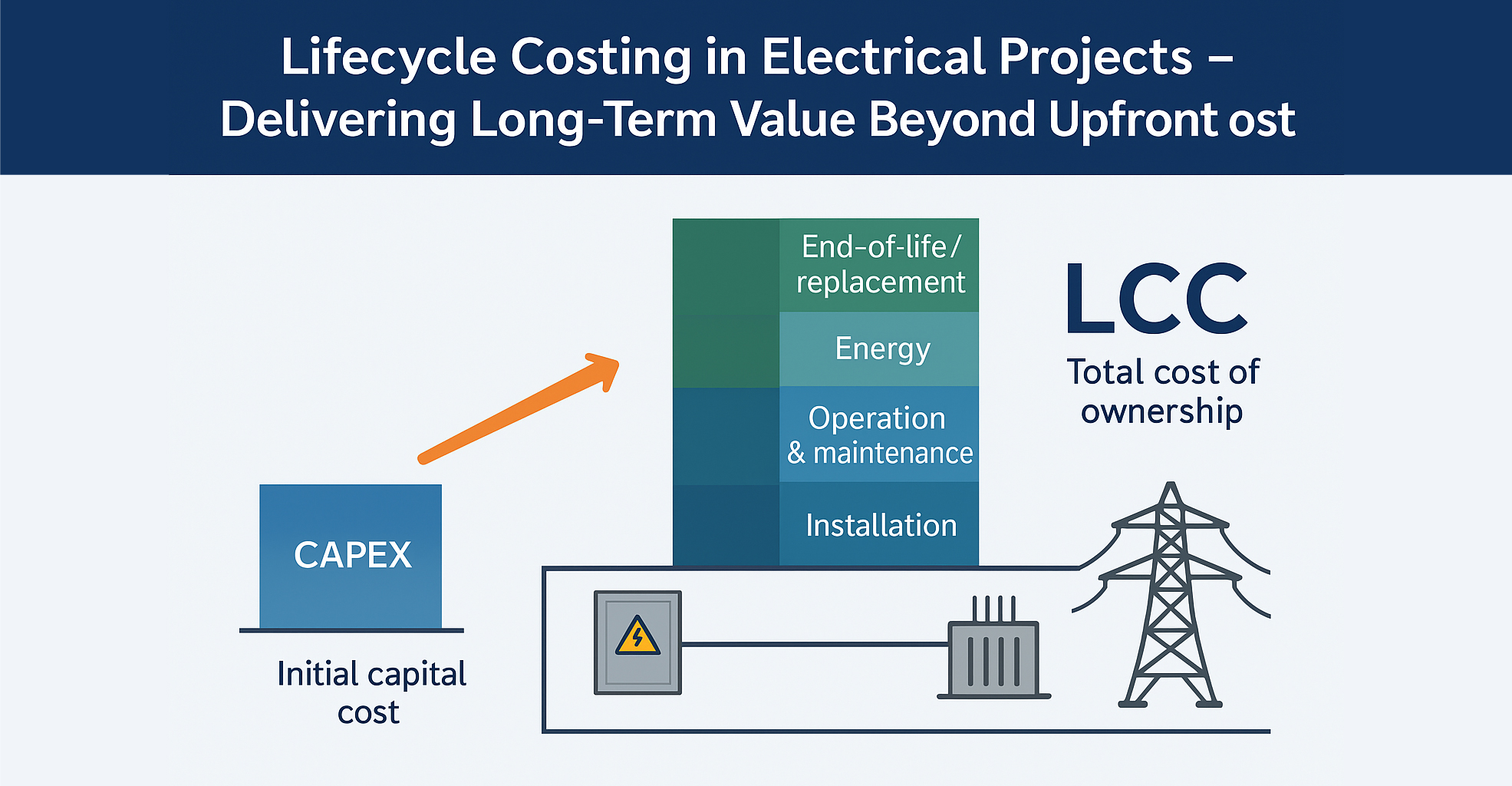
In electrical engineering, projects are often judged on their ability to meet technical requirements within budget and schedule. Too frequently, however, project evaluation focuses narrowly on capital expenditure (CAPEX), sidelining the costs that accumulate over the decades-long life of electrical infrastructure. Lifecycle Costing (LCC) offers a more strategic lens—one that considers not only the purchase price, but also operating, maintenance, reliability, and end-of-life costs.

Value engineering (VE) is a systematic and disciplined approach aimed at enhancing the value of a project by evaluating functions and identifying opportunities to reduce costs while maintaining or improving safety, reliability, and performance. In electrical engineering projects, VE is especially crucial due to the high capital investments and the need for long-term operational efficiency. The goal is not simply cost-cutting but optimizing solutions to deliver the best value over the project lifecycle.