
SOLUTION 01 / 06
Medium Voltage Distribution & Protection
UP TO 36 kV
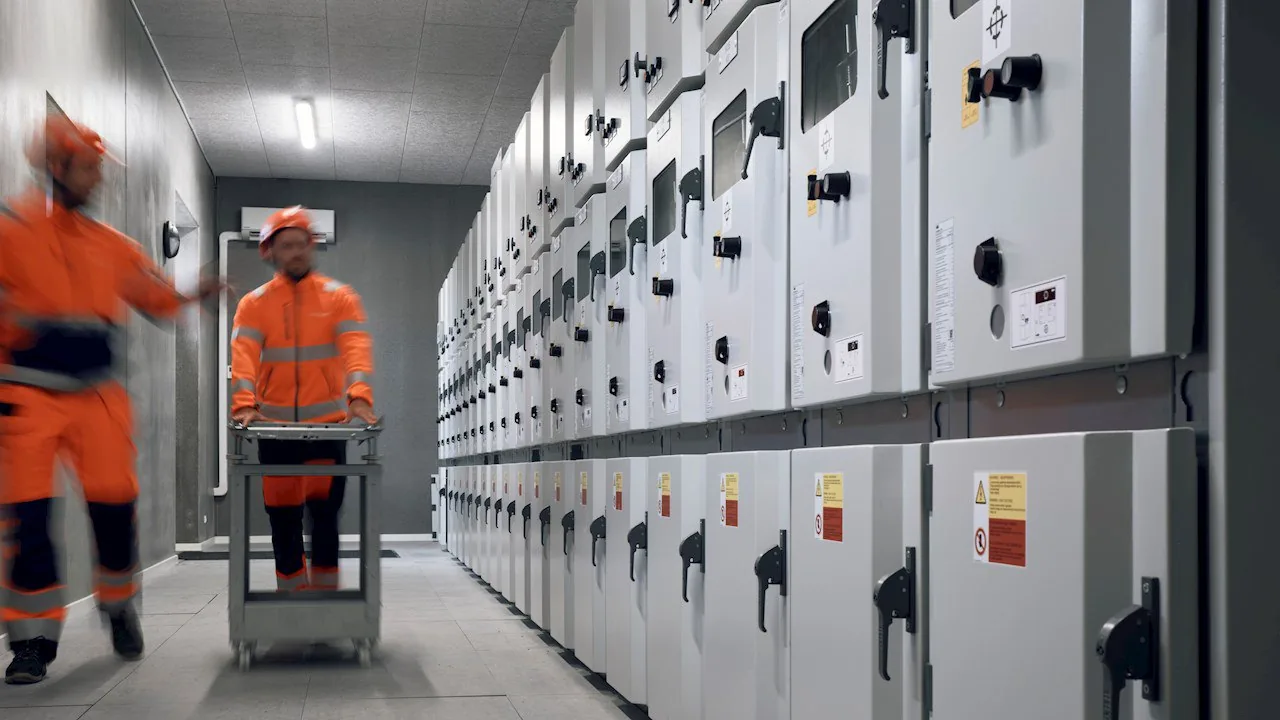
Switchgear, protection and cable-interface equipment for medium-voltage power distribution, switching, control, protection and network operation.
We connect medium-voltage project requirements with established international manufacturers and Türkiye’s electrical manufacturing capabilities. Our sourcing approach begins with the project’s technical and commercial requirements, not simply a product code.
EQUIPMENT SCOPE
What we source for medium-voltage systems
Our medium-voltage supply scope covers systems up to 36 kV. Not every product type is offered at every voltage; ratings for each product follow its manufacturer’s documentation and are confirmed against your specification.
Air-insulated (AIS) and gas-insulated (GIS) describe the insulation arrangement. Metal-enclosed and metal-clad are construction classifications. One assembly can carry both an insulation description and a construction classification, but metal-enclosed and metal-clad are not interchangeable: metal-clad denotes a specific, more compartmentalised form of metal-enclosed construction, as defined by the standard the project specification uses.
SWITCHGEAR
01
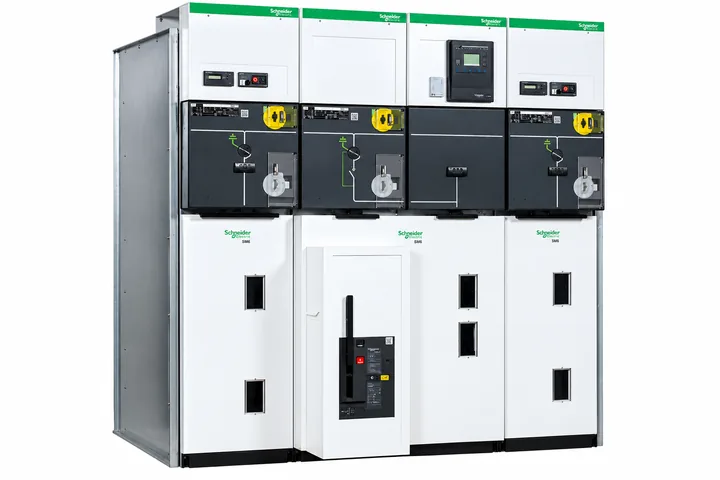
Air-insulated switchgear (AIS)
Panel lineups that use air as the main insulating medium, typically arranged indoors at intake and distribution points.
02
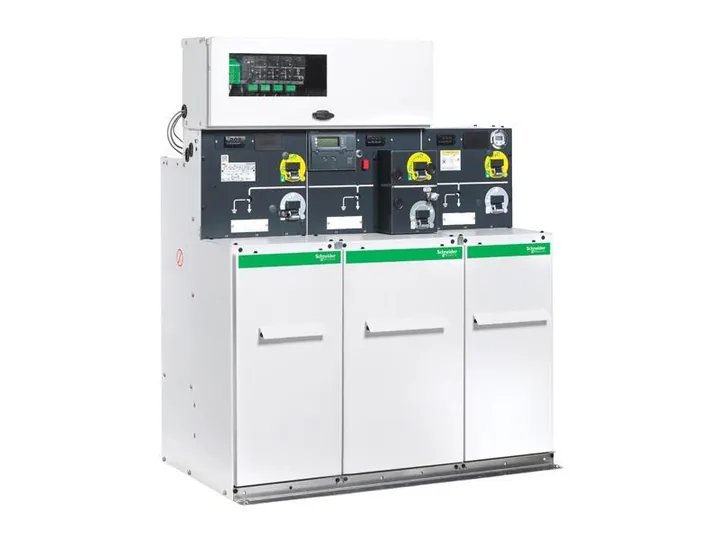
Gas-insulated switchgear (GIS) and ring main units (RMUs)
Gas-insulated switchgear where space or the environment is constrained; RMUs as compact switching units for secondary distribution, including the MV compartment of compact / package substations.
03
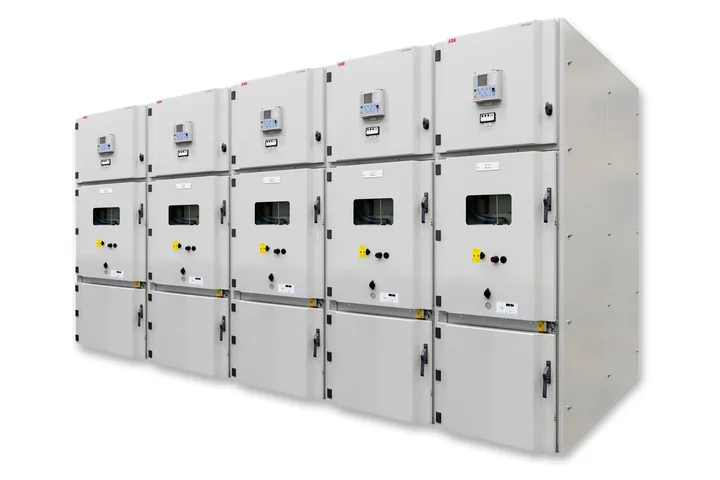
Metal-enclosed and metal-clad switchgear assemblies
Construction classifications that apply to air- and gas-insulated designs. The construction, compartment segregation and operator access required are set by the project specification.
PROTECTION & DISTRIBUTION
04
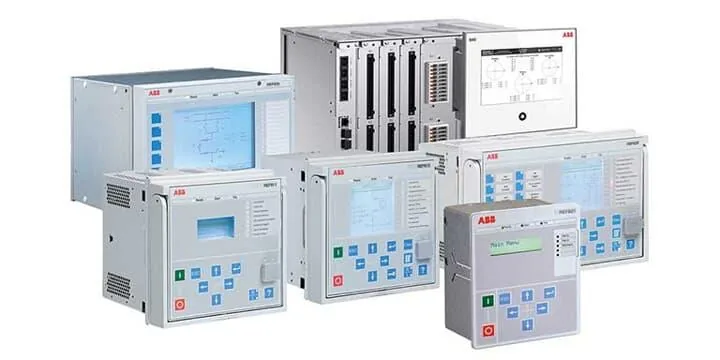
Protection relays
Relays that detect abnormal conditions, usually through current and voltage transformers, and initiate circuit-breaker tripping. Protection schemes and settings come from the project’s protection design.
05
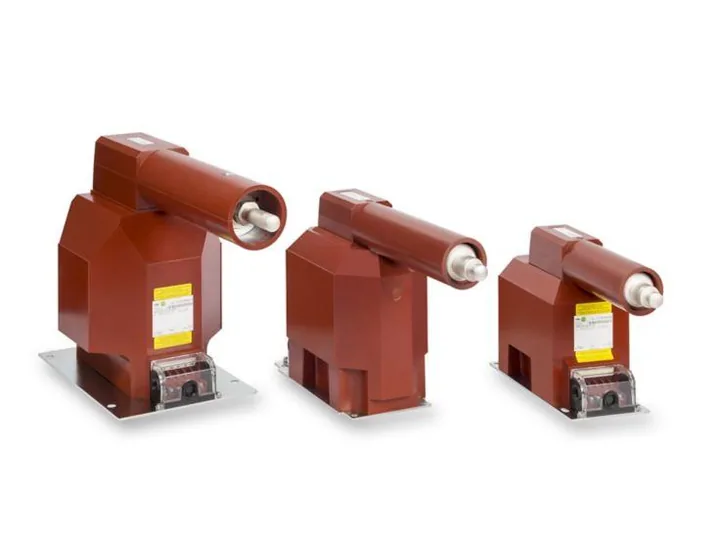
Medium-voltage current and voltage transformers
Instrument transformers that provide scaled current and voltage signals for protection relays and metering.
CABLE INTERFACE
06
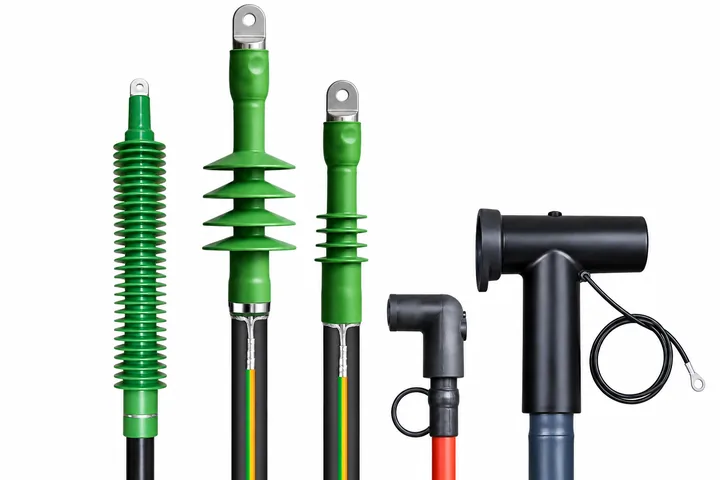
Medium-voltage cable termination and accessories
Indoor and outdoor termination kits and cable accessories, matched to cable type, conductor size, insulation and connection interface.
APPLICATIONS
Where this equipment is applied
These are general applications for medium-voltage distribution and protection equipment.
Utility and distribution networks
Primary and secondary substations, ring networks and overhead-line distribution, where network-operator requirements govern equipment selection.
Industrial facilities
Intake substations and internal medium-voltage distribution to process loads, motors and transformers.
Commercial and institutional developments
Medium-voltage intake and transformer substations serving hospitals, campuses, retail and mixed-use buildings.
Infrastructure and energy projects
Transport, utility infrastructure and generation-connected sites that require medium-voltage switching and protection.
SPECIFICATION
Information that shapes a quotation
Medium-voltage equipment is quoted against the project’s electrical data and site conditions. The more of the following a requirement states, the more precisely manufacturer options can be compared.
Rated voltage and insulation level
Maximum system voltage and the power-frequency/lightning-impulse voltages the equipment must withstand.
Typical: 12, 17.5, 24 or 36 kV, with 28/75, 38/95, 50/125 or 70/170 kV withstand levels; availability varies by product.
Rated current
Continuous current busbars and feeders carry within temperature limits.
Typical: 400–630 A for RMUs and secondary switchgear (transformer feeders often 200 A); 630–4000 A for primary switchgear, depending on voltage and ventilation.
Short-circuit duties
Fault current withstood for a stated duration, peak withstand, and circuit-breaker breaking/making capacity.
Typical ratings: 16–25 kA (RMUs, secondary switchgear) or 25–50 kA (primary switchgear), for 1 or 3 s, depending on equipment and manufacturer.
Insulation and installation conditions
Insulating medium and the site environment the equipment operates in.
Typical: air (AIS) or sealed gas (GIS); standard indoor service −5 to +40 °C up to 1000 m; harsher sites or higher altitudes need derating or specific versions.
Switchgear configuration
Arrangement of functional units and busbars on the single-line diagram.
Project-dependent: incoming, outgoing, transformer, bus-section and metering units; single or double busbar; RMUs commonly 1–4 functions per enclosure; future extension.
Protection requirements
Protection functions, relays and instrument transformers that detect faults and trip breakers.
Project-dependent: typically 1 A/5 A CT secondaries; CT classes 0.2–0.5 or 5P/10P; VT classes 0.2–1 or 3P/6P; 110/220 V DC auxiliary supply.
Applicable standards and utility requirements
Standards and network-operator rules the equipment is designed, tested and documented to.
Project-dependent: the IEC or IEEE/ANSI standards named in the project specification, plus utility requirements.
Typical ranges are representative of published manufacturer ratings, not ratings of any single model, and are confirmed per project.
Ratings and declared compliance come from each manufacturer’s documentation for the specific product and are reviewed against your specification before order.
INTEGRATED PROJECT SUPPLY
Coordinated with the wider electrical package
Medium-voltage switchgear is rarely procured in isolation.
It feeds transformers, forms the MV section of compact / package substations and connects downstream to low-voltage distribution. Multiple electrical packages can be coordinated through a single sourcing relationship, reducing procurement fragmentation. In a compact / package substation, the MV, transformer and LV sections are sourced around a common project requirement.
MV → TRANSFORMERS
Outgoing feeders and cable terminations sourced to match the transformer rating and connection defined in the specification.
MV → COMPACT / PACKAGE SUBSTATIONS
RMU or switchgear as the MV compartment of an integrated package.
MV → LOW VOLTAGE DISTRIBUTION & CONTROL
Downstream main and sub-distribution sourced to the same project requirement.
PROTECTION AND CABLE INTERFACES
Relays, CT/VT and cable accessories sourced consistently with the project’s protection design and cable schedule.
We coordinate sourcing across these interfaces.
SUPPLY NETWORK
Multi-manufacturer sourcing
We source around the technical and commercial requirements of the project rather than restricting the solution to a single manufacturer’s portfolio. Our Türkiye base provides access to a strong electrical manufacturing ecosystem alongside established international technology brands.
Representative examples in our medium-voltage scope




PROCUREMENT PROCESS
From enquiry to coordinated supply
01
Technical enquiry
You share equipment schedules, specifications, drawings, destination and delivery requirements.
02
Documentation review
We review equipment, ratings, interfaces and manufacturer options against your specification.
03
Manufacturer sourcing
We identify appropriate manufacturers and technically suitable solutions.
04
Technical-commercial clarification
We coordinate scope, pricing, documentation and commercial requirements, and clarify deviations or alternatives before order.
05
Coordinated supply
Manufacturer follow-up, documentation and agreed project requirements, then shipment coordination and delivery of the agreed supply package.
Our documentation review checks the offered equipment against your specification; design and engineering responsibility remain with your project engineer. Installation and commissioning are carried out by your appointed contractors; on request, AdepaTrade can arrange on-site engineering supervision and commissioning support under a separate scope.
PROJECT REQUIREMENT
Tell us what your project requires.
We source the solution.
Send the project documents you already have. Customers typically submit:
Technical specifications · Single-line diagrams · Equipment schedules · Bills of quantities (BOQs) · Project location and delivery requirements
Or email adepa@adepatrade.com